






Calterah Day 2026: Advancing mmWave and UWB Innovations to Power Automotive Perception and Connectivity Upgrades
2026-06-09
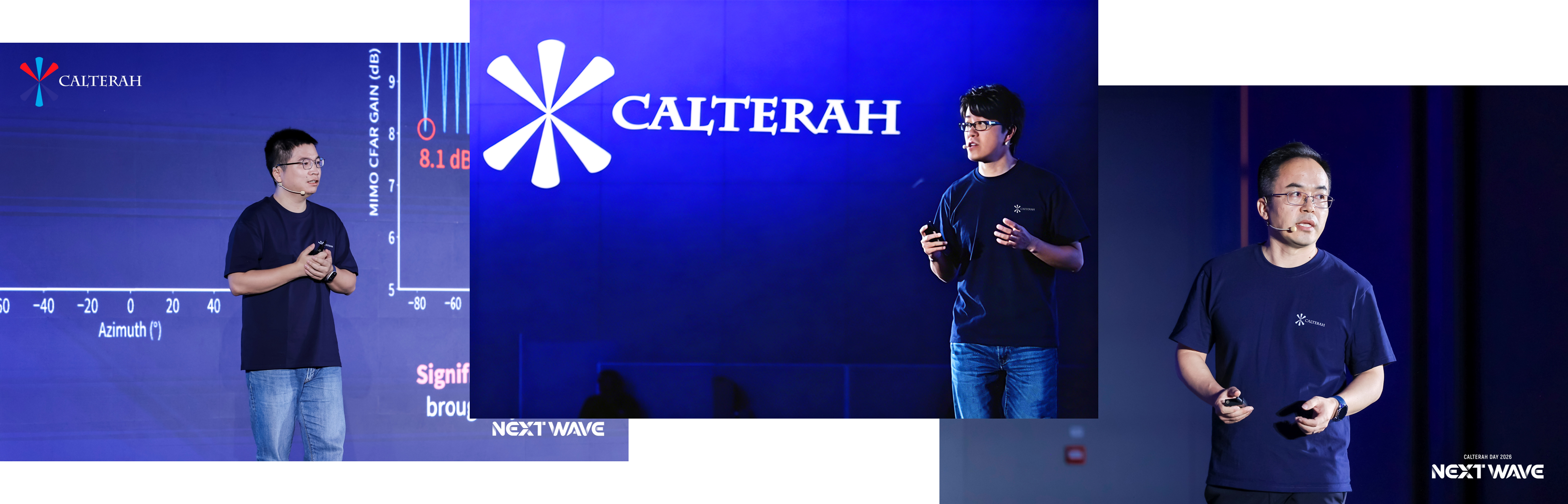
On June 5, Calterah Day 2026 was successfully held in Zhangjiang Science City, Shanghai. Calterah unveiled two high-performance mmWave ADAS radar chips—the fully optimized Kunlun-Pro and the world’s first 6T6R ADAS radar SoC, Andes-Pro. In the ultra-wideband (UWB) segment, Calterah introduced the latest Child Presence Detection (CPD) radar development suite and a Parking Assist System (PAS) radar development suite that is the world’s first to have implemented the UWB 4ab Sensing technology. Via ongoing innovations and product iterations, Calterah continues empowering smart, connected vehicles.
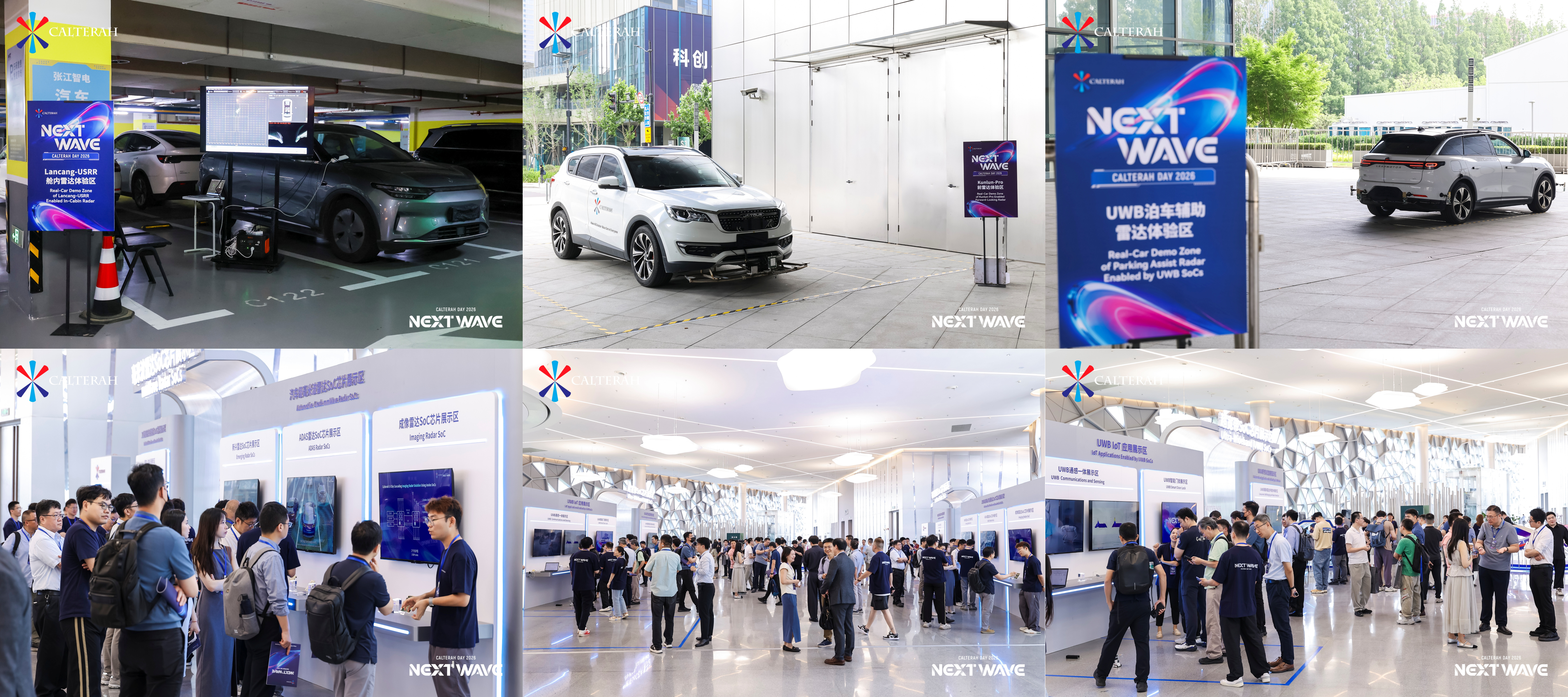
The event featured a series of interactive demos covering forward-looking radar, in-cabin radar, indoor sensing, parking assist, air-mouse, etc., allowing visitors to experience firsthand the intelligent scenarios enabled by Calterah mmWave radar chips and UWB chips.
Market Momentum: Leading in China, Expanding Globally
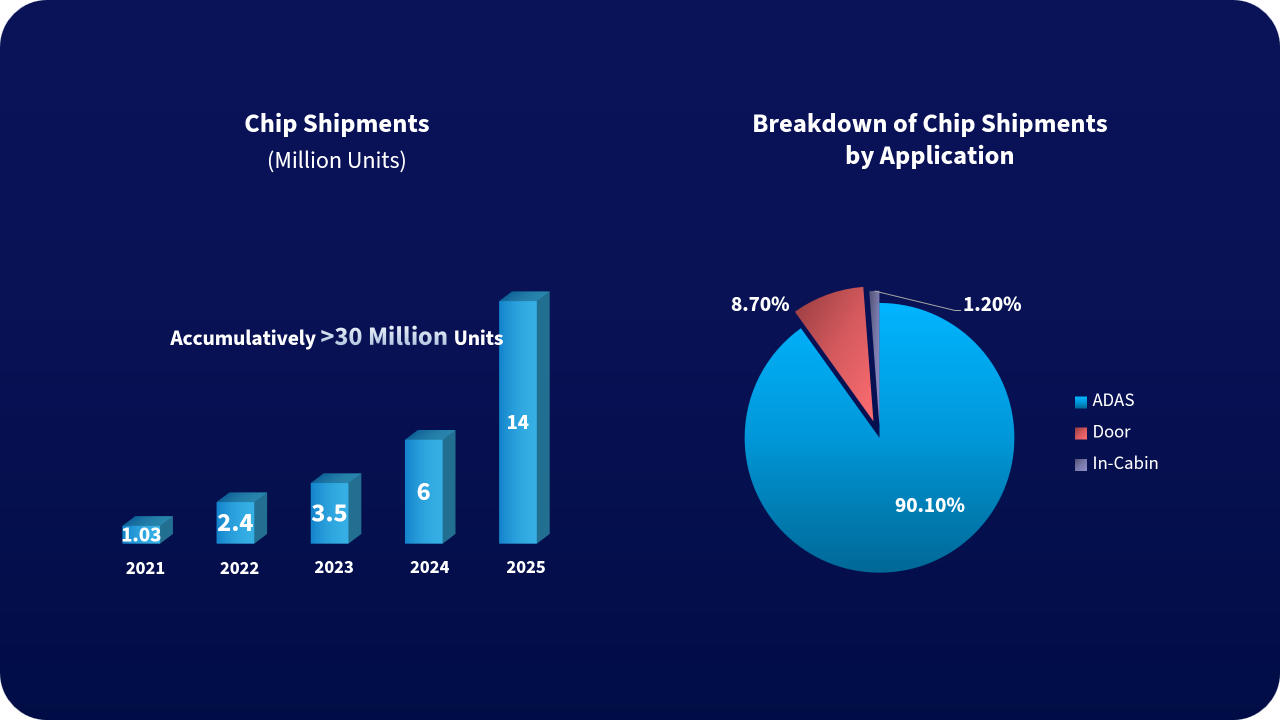
As of the end of 1Q26, Calterah’s cumulative shipments of mmWave radar chips exceeded 30 million units, powering over 300 vehicle models from more than 30 car OEMs, including traditional OEMs, emerging EV brands, and joint-venture manufacturers. According to relevant market data, Calterah’s market share of China passenger vehicle radar (excluding imports and exports) reached one-third in 2025. In the segment of 4T4R SoC for 4D mmWave radar, Calterah led the market with a 66% share.
Calterah’s global expansion is also accelerating. Over the past year, vehicle models mounted with Calterah chips from two European and North American automakers have reached SOP. This year, an SOP vehicle from a traditional automaker in Europe will also adopt Calterah SoCs. According to data from industry research organizations, Calterah now holds approximately one-quarter of the global automotive single-chip (SoC) mmWave radar market.
During the product reveal, Calterah Founder and CEO Dr. Jiashu CHEN noted that radar edge-computing architecture based on SoCs offers significant advantages over centralized computing architecture in system cost, engineering complexity, functional safety, cybersecurity, etc., which means SoC-based solutions are expected to remain the mainstream choice for automakers and Tier-1 suppliers in the near term. Research institutes forecast that SoCs will account for more than half of the global radar chip market by 2030.
Launch of Two High-Performance mmWave ADAS Radar Chips
As automotive active-safety requirements continue to upgrade, Euro NCAP 2026 has expanded AEB testing to cover full-speed scenarios, all-weather conditions, all road users, and more complex environments. Meanwhile, China L2 ADAS and AEB regulations are raising requirements for perception performance in rain, fog, tunnels, and challenging lighting conditions. These trends are demanding longer detection range, higher height-measurement accuracy, and greater dynamic range of radar sensors.
To address these demands, Calterah introduced two major technology upgrades: Timing Engine (TE) 2.0 and Radar Signal Processor (RSP) 2.0. TE 2.0 provides exceptional flexibility, supporting fully customized waveforms and nanosecond-level control of the RF subsystem. RSP 2.0 delivers major enhancements in signal processing performance, operator flexibility, and feature optimization. Built on these advancements, two high-performance ADAS radar SoCs, Kunlun-Pro and Andes-Pro were unveiled by Calterah mmWave Radar Product Line Director Zheng WANG.
Fully Optimized Kunlun-Pro with 10× More Powerful Signal Processing
Kunlun-Pro has a 5T4R architecture and delivers full optimizations in processing resources, SNR, and channel count compared with conventional 4T4R products, fulfilling the increasingly demanding requirements of forward sensing.
- Integrated with RSP 2.0 that offers dual combos of operator engines, Kunlun-Pro delivers 10× more powerful signal processing capability for efficient execution of compute-intensive algorithms and higher-quality point clouds. The chip also provides a higher DMIPS CPU and larger memory to process more radar target data.
- The chip boasts a 2.5 dB boost in SNR, together with higher transmission efficiency and stronger interference resistance, enabling more reliable detection of weak targets at long range.
- Kunlun-Pro offers 25% more virtual channels, which can be used to enhance azimuth measurement and separation of strong and weak targets, or used to improve stability in elevation measurement in complex scenarios.
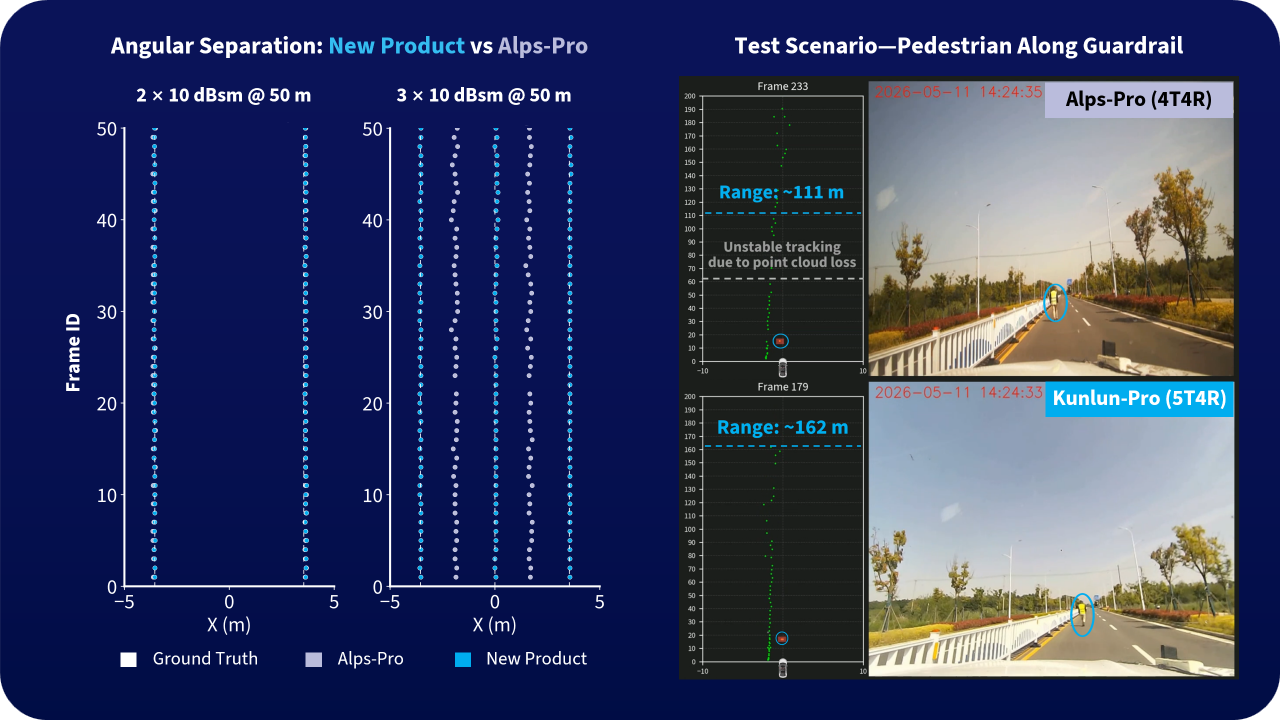
In field test demos, Kunlun-Pro shows outstanding performances. Compared against Alps-Pro, Kunlun-Pro achieved a maximum stable detection range of 70+ m for traffic cones, around 1.5 times farther than that of Alps-Pro, in a challenging scenario with multiple traffic cones placed at an angle beside a stationary vehicle. In the typical scenario of a pedestrian walking a guardrail, the maximum pedestrian detection range exceeded 160 m, an improvement of about 50%. Plus, Kunlun-Pro produces more stable and concentrated point clouds with stronger separation of closely-spaced targets. Kunlun-Pro samples are now available, set to enhance the all-condition perception capability of next-generation L2 ADAS radar systems to meet global market and regulatory requirements.
Andes-Pro, World’s First 6T6R ADAS Radar SoC
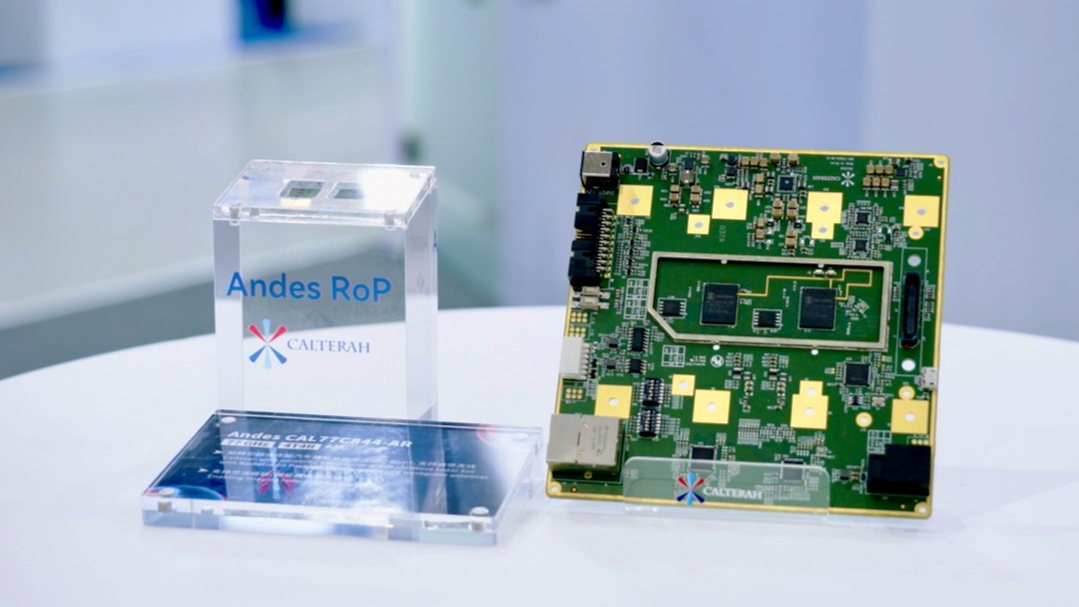
As the world’s first 6T6R ADAS radar SoC, Andes-Pro delivers comprehensive performance upgrades. Its 6T6R architecture provides 36 virtual channels, stronger angular resolution, enhanced RSP processing power, and further extended memory. A single chip achieves ultra-high angular resolution (1° in azimuth; 3° in elevation) and a 200 m detection range for weak targets with -5 dBsm RCS. Compared against existing multi-chip 8T8R solutions, Andes-Pro offers a compelling alternative. It also supports cascading two chips via Flex-cascading® to enable cost-effective 12T12R imaging radar systems.
Unlocking Full Potential of UWB Radar Technology
Beyond automotive active safety, Calterah further explores the UWB radar functionality and emerging applications. As introduced by Junming Xiao, Calterah Advanced Connectivity Product Line Director, Dubhe CAL1106AQ SoC is the world’s first chip to implement the IEEE 802.15.4ab-defined Sensing technology. Based on CAL1106AQ, Calterah launched a CPD radar development suite and a PAS radar development suite.
User-Oriented, AI-Enabled UWB CPD Development Suite
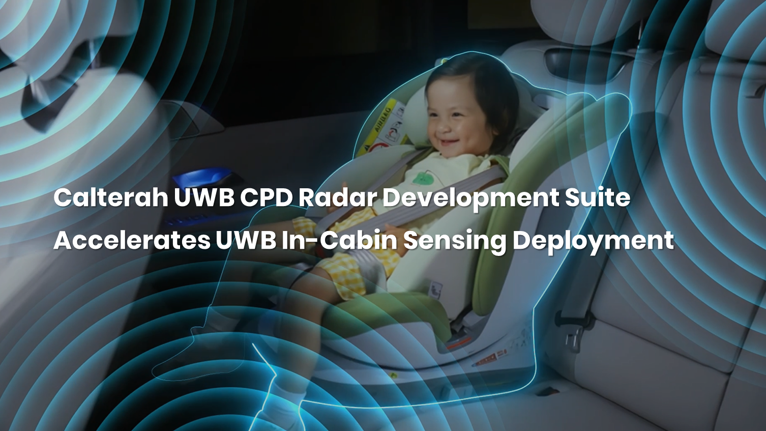
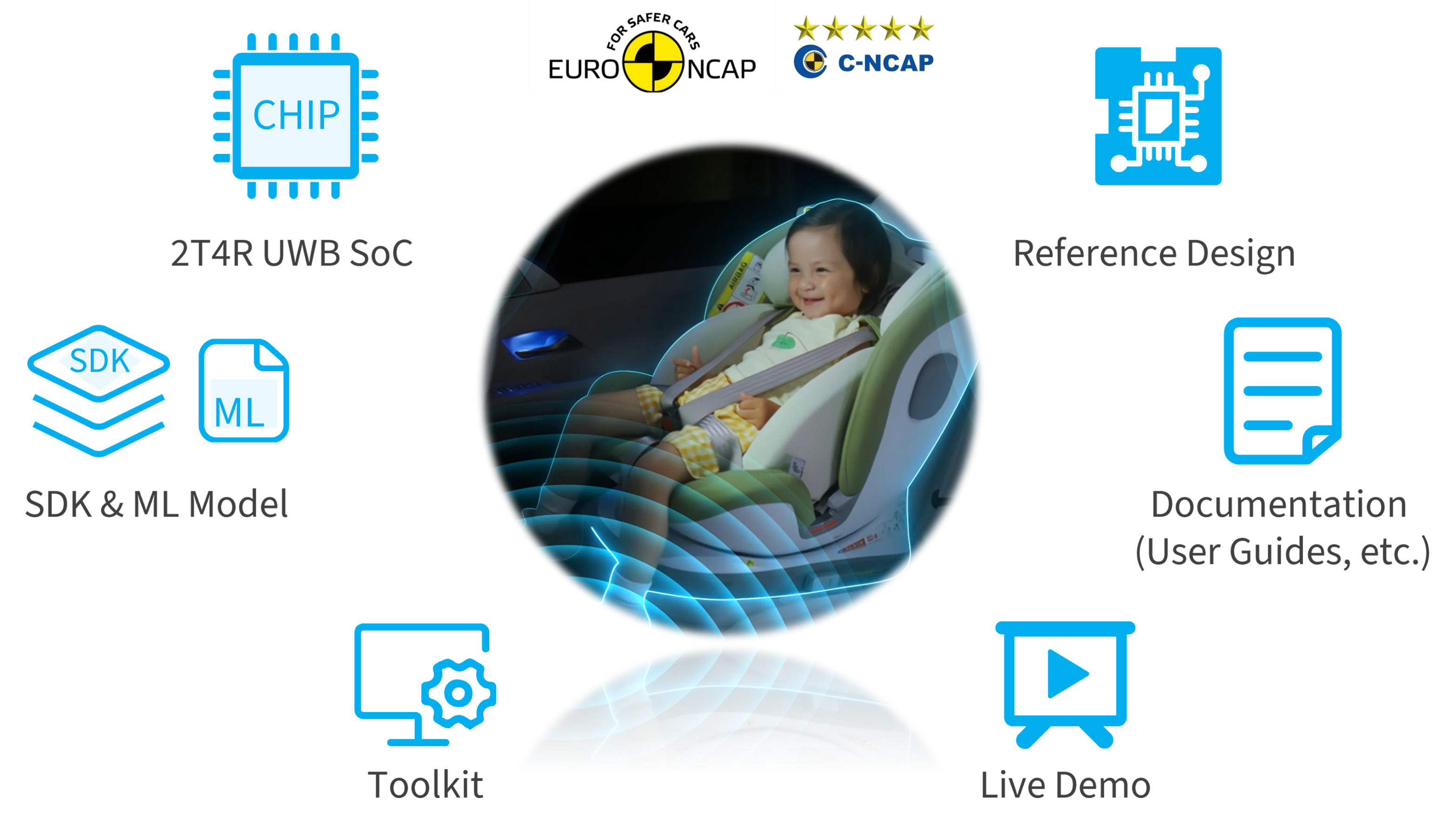
Euro NCAP 2026 has made CPD a mandatory requirement for a five-star safety rating, and C-NCAP is expected to introduce similar scoring criteria in 2027. As demand for in-cabin sensing continues to grow, Calterah launches the CPD development suite based on Dubhe CAL1106AQ, including reference designs, an SDK, machine-learning models, toolchains, and real-time demos. The suite is designed to help shorten cycles of hardware, software, and algorithm development for customers.
UWB PAS Development Suite Based on 4ab Sensing and 2T4R Architecture
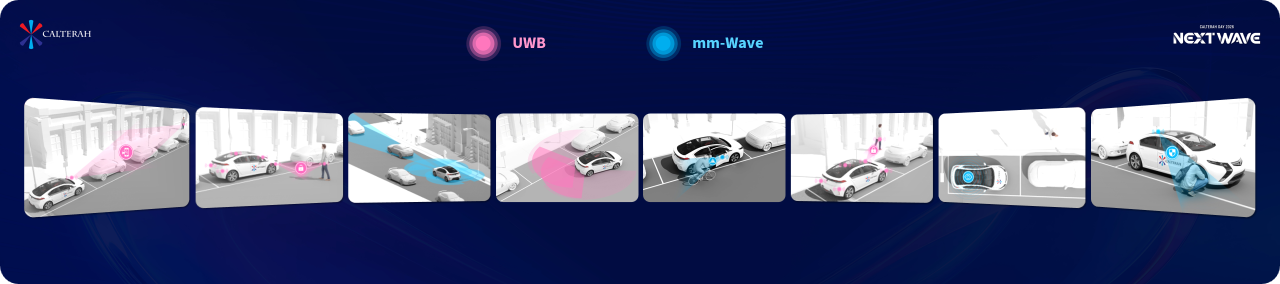
Compared to ultrasonic sensors, UWB radar offers multiple advantages, including height and velocity measurement, stable operation in adverse weather, and multifunctional reuse, making it highly competitive for the parking assist application. To address commercialization challenges to this application, Calterah has introduced several key innovations.
- Height measurement and hanging-object detection: A leading 2T4R architecture provides stronger angular resolution, while the innovative Radar Leakage Suppression (RLS) module achieves approximately 40 dB leakage suppression, ensuring accurate measurement of angles and heights.
- High-speed APA with simultaneous ranging and radar operation: By combining the 2T4R architecture with the Fine Timing technology, the chip precisely schedules ranging and radar frames, greatly reducing frame conflicts. As a result, it enables radar detection and ranging to operate concurrently while meeting the real-time sensing and positioning demands in the automated parking scenario.
- Multi-anchor interference mitigation and nearby stationary-object detection: As the world’s first UWB SoC to have implemented the IEEE 802.15.4ab-defined Sensing technology, CAL1106AQ brings multiple benefits, including: Precise synchronization and scheduling among multiple anchors on a vehicle, improving sensing performance; the bi-static sensing architecture to create a radar network, effectively reducing intra-anchor leakage and achieving centimeter-level accuracy for stationary-object detection. With all these advantages, the CAL1106AQ-based PAS solution can meet UN R158 requirements for detecting people and objects behind a vehicle.
At the Chip Technology Development Forum and the Roundtable Discussion session, experts from the China Association of Automobile Manufacturers (CAAM), Yole Group, AUMOVIO, Car Connectivity Consortium (CCC), Geely, ABI Research, and Great Wall Motors (GWM) joined Calterah to share the latest developments and trends in mmWave radar and UWB technologies. They also discussed strategic choices for China supply chain of intelligent-driving perception, in terms of technology roadmaps and automotive applications.

From car locating, hands-free unlocking, and assisted driving, to parking assist, automatic doors with collision avoidance, CPD, and sentry mode, Calterah’s technology portfolio now spans a wide range of scenarios in automotive perception and connectivity. Going forward, Calterah will continue working closely with industry partners to provide a more reliable and comprehensive technological foundation for smart and connected vehicles, enabling more enjoyable driving experiences, with round-the-clock protection for the safety of drivers, passengers, and vehicles.